Monday, June 13, 2016

Your English Corner


PTE Academic exam here I come!


or paste this link into your smartphone or computer calendar:
 webcal://p45-calendars.icloud.com/published/2/ZlmlUMJ2ng1WI9qLzWTAFc6v9ZKyPoqy8R8N0IMzuHnCq3Fidax4fqhukkoQsuP4-ZMywsJgQprZPspJJYWK8QZ0RMBxOoaMjOubLFbP5Fs 


Wednesday, July 08, 2015

private tuition

Dante Patetta (Entrepreneur) 

Maite Laurenzzo (Student)

Silvia Mucci (Minister for the Environment, Buenos Aires Province)

Marcos Rodriguez (Economist, Rural Development)

Emilia Colacelli (Microfinance Consultant)

Jorge Zaiatze (Kidney Specialist, Co-founder & Director of Caseros Sanatorium) 

Ruth Muñoz (Social Economics Tutor, National University of General Sarmiento)

Noriko Nagashima (Certified Interpreter)

Osvaldo (Waiter)


Wednesday, April 08, 2015

Back In The BsAs! (Buenos Aires)

After a year and a half abroad – back in Buenos Aires! Suitcase full of teaching materials. Ready to work again! Preferences: large groups, unchanging groups (fixed members), flexibility with materials, motivated students, proximity to home, good professional development.

Wish me luck!


National flag as seen from home, Centenary Park

Wednesday, April 01, 2015

Dante & Maite's Corner – preparation for Australia/NZ travel

Private tuition: Dante Patetta (Entrepreneur) & Maite Laurenzzo (Student)


PROFILE:


Maite began English study in secondary school and took private lessons for several months leading up to planned overseas stay, which lasted about 1.5 years. Took semi-intensive English classes overseas for a period of months. Has gained a good ear for it and picked up fluency of speech, with respect to pronunciation, speed and vocabulary. This was also made possible through social life and working environments (hospitality) with both native and non-native speakers.

Purpose = ESL

Goals – short-term = general fluency with a focus on vocabulary, long-term = IELTS exams

Style = self-reported more visual than auditory and kinaesthetic, a preference towards interactive or group activities, more so reflective than impulsive (?)

Expectations = 2 x two-hour lessons per week (other?)


STRATEGIES: will make use of flash cards for vocabulary, we'll keep a noodle bowl of new words, subtitled films and reading. 


 Lesson No.1                                                                                                          materials (.doc)


homework - mark, and then highlight going to + verb is also used for making predictions based on situation now, examples, check concept

which leads into the first activity which is both practice of language for making plans with will, present continuous, and going to + verb, in the context of setting up a stall at the weekend markets.

possible vocabulary:- VERBS organise, arrange, work out, design, map out, prepare, schedule; intend, aim, hope NOUNS strategy, idea, proposal, suggestion, way; aim, idea, intent, objective, goal, target; drawing, diagram, sketch, illustration.


Well done reconstructing the song from memory!


Lesson No.2                                                                                                           materials (.doc)


Speaking Practice for Ordering


Lesson No.3 


Vocabulary & Grammar poinsts


Lesson No.4                                                                                                        materials (.doc)


Public Transport


Lesson No.5                                                                                                  


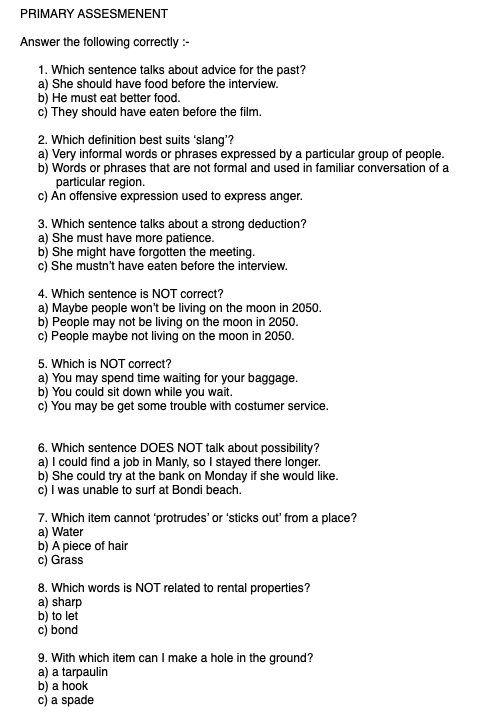
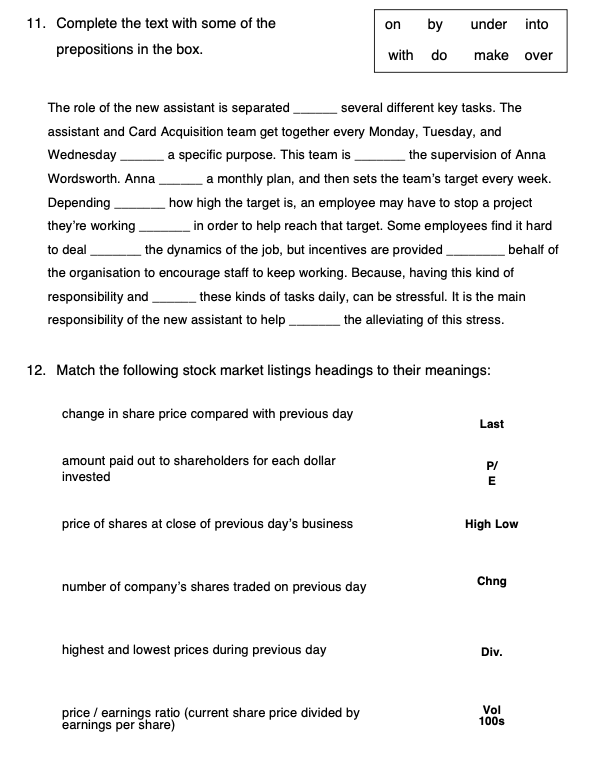
Assessment 


Lesson No.6

Covering Letter practice


GOOD LUCK IN AUSTRALIA/NZ!


Lesson No.7


Reconvene and General Fluency


Lesson No.8

Listening with Song Reconstruction


Lesson No. 9


Lesson No. 9


Vocabulary for Planning continued


Wednesday, April 02, 2014

OUP Webinars

looking forward to these Oxford University Press webinars

Getting Your Students to Speak takes a look at why students are sometimes reluctant to speak, or sometimes say the absolute minimum in class

Helping With Academic Writing: a learner's dictionary of academic English looks at the core academic vocabulary and choosing the right word in students' writings

and Recycling, Reinforcing and Building on New Language for Young Learners, a seminar on how to help your students learn more by 'teaching them less'!


commentary

Thursday, February 13, 2014

Do you have a problem with these sounds? How do you say these words 'good' and 'would'? Are they the same?

/v/ & /w/ 
vine    wine 

How to make the sounds :

To make the /v/ sound, put your upper teeth onto your lower lip. Use your voice as your breath passes 
through the teeth and lower lip. To make the /w/ sound, push the lips forward and say /u/, then let the tongue 
and lower lip drop. When you let the first sound glide into the second (usually a vowel follows), /w/ is 
produced. In this Unit, /w/ is not distinguished from /h/ (wail vs. whale)

Wednesday, January 15, 2014

Professional Development | Navitas (Australia ELICOS)


key moment -

during class we looked at a vocabulary table: a way to record new words for the the duration of the course in the back of their books. Columns included item, form, collocation, pronunciation, translation, and idea. 

I kept the table on the board and during the next activity, Stop the Bus, it became useful. In Stop The Bus SS elicit from their teams TL put on slips of paper at their table. I think having the vocabulary table on the board was convenient for this activity because it could be used as an aid throughout the game: to help in their eliciting of words from their team they could also talk about the form, collocation, and idea of the word as we had seen earlier by doing the other examples on the board.


Friday, January 10, 2014

Professional Development | Navitas (Australia ELICOS)


Setting a few alarms for class today worked well to keep us moving, to ration out time to tasks, and to maintain a good pace. 

Ss responded well to games and task-based activities. 


Sunday, September 29, 2013

Professional development | Navitas English (Australia ELICOS)


learners play Stop The Bus!

narrative

Filling in for another teacher I decided to arrive early enough to go over materials, sketch out a plan, and introduce myself to staff before class.

The school has two levels of quite large classrooms – in my experience – plenty of resources and libraries, interactive whiteboards, and computers in every room. Staff were friendly and I enjoyed overhearing some interesting ELT-speak going on behind me while I planned as other staff discussed their students and classes. Having been away to Argentina for almost 4 years, it was great to be there amongst teachers, and I could see how well organised the office was.

As a warm-up or rapport building task I had planned a mingle activity (alphabet soup; learners arrange themselves alphabetically by asking questions) and teacher story. And so, learners mingled making questions about where they had been last on holidays. After this we sat in a horseshoe seating arrangement – I'd hoped everyone might have arrived to class by this time – where learners listened to a story about my last holiday at Iguazú Falls.

I chose to do this, one to build rapport, but also because the page of the course-book I was handed featured these exact waterfalls, which I had visited. Voted one of the New Seven Wonders of Nature in 2011, and one of the most visited sights in South America, I thought it would go down well, particularly with the Brazilian leaners.  

During my story each of four missing learners showed up, one by one, the last of whom at the end of my story.

Adhering to school policy, as they arrived, I asked the late arrivals to wait downstairs until half-past. The last arrived at exactly half-past, so I asked her to go down to collect the others. 

Those who heard the complete story seemed interested, making questions afterwards, and it cropped up again several times during the lesson.

After some gist reading about an Iguazú Falls tour guide we went on to elicit verb patterns, key language from their previous lesson. After completing a few exercises from the course-book, I asked learners to recall their own last holidays, and to write down example sentences using the verb patterns Verbs were, for example, I love..., I advise..., I hate..., I'd like..., and at this stage I was using a test-teach-test pattern to assess their ability of it. 

After a little clarifying on the board, by marking two columns, 'verb + infinitive' and 'verb + gerund', and eliciting the verbs into each, learners went on to correct their mistakes. Leaners shared stories with partners while I listened for persistent errors. Leaners swapped roles.  

For the second half of the evening we practised giving directions – I'd probed them on directions to anywhere they might have mentioned by chance earlier in the evening, to also get a sense of their ability.

In conjunction with a listening learners marked out points on a map of Iguazú Falls in their books. Peer checking answers before listening again. We then looked at a transcript of the listening and learners underlined all directions evident in the text. In pairs they then wrote these directions below illustrations in their books. I gave each of them a location in the school to keep secret by writing it in their notebooks. They then thought of directions to this location and wrote them down carefully. Taking turns, learners listened to their partner's directions and tried to follow them, in order to discover their mystery location in the building. The class seemed to be enjoying itself, a little guidance here and there.

Finishing the class we played Stop The Bus, a game in which learners must elicit from their team target language from the lesson using any method they wished, short of uttering that actual TL. The first to reach a certain number wins and should shout 'stop the bus'.


observation

The learners who had been with me from the beginning of class responded better than those who hadn't, attention going intermittently towards their smart-phones throughout the lesson.

I'm not sure whether this was a response to my having asked them to wait downstairs. Indeed, not having been at the warm-up stage they were less engaged, and warmed-up!

I understand the policy if it encourages punctuality by having learners, should they be running late, to still adhere to some kind of schedule. Sort of like a second chance at being on-time, though they'll miss arguably the most important lesson stage, at least they're encouraged to be punctual. If they arrive within that 30 minutes they must wait it out. The obvious question is will learners take advantage of this and always arrive 30 minutes late? Of course, any later than half past the hour means they miss the lesson. There are great advantages to classroom management with this rule.

key moment

When the learners returned from their last break I gave them three options for how to carry on with the lesson: watching a course unit video, doing some interactive more task-based activity, or completing course-book exercises. They had already seemed tired on arrival, and I didn't want to burn them out, therefore choosing their own task, I think works well. 

The task-based activities they chose were: giving each other directions in a 'total physical response' activity, and Stop The Bus, which both worked well. The course-book exercises I suggested for homework as a good way to consolidate the lesson points, especially as they were to be tested on some  next lesson.